Driving Future Progress at South Bank Colleges
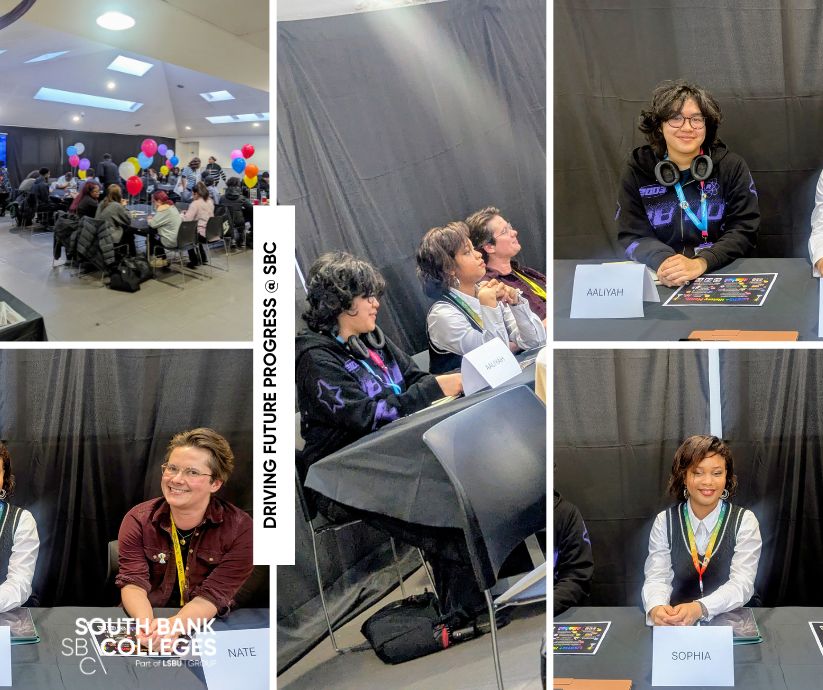
On Wednesday 25th February 2026, students and staff gathered at the Clapham Campus Hub for a powerful LGBTQ+ History Month event centred on reflection, dialogue and forward momentum.
Framed around the theme “Celebrating Achievements, Addressing Historical Harm; Driving Future Progress,” the session combined historical awareness with lived experience, and made one thing clear: progress is real, but it is not finished.
The event opened with a strong statement of solidarity, reinforcing that at South Bank Colleges, belonging should be “a right, not a privilege.” Creating an environment where students can be “their most authentic selves without apology” remains central to the Student Union’s mission.
Grounded in History
A UK LGBTQ+ historical timeline provided the backdrop to the discussion, charting key milestones including:
-
1967: Partial decriminalisation in England and Wales.
-
2000–2003: Repeal of Section 28.
-
2001: Age of consent equalised.
-
2004: Gender Recognition Act.
-
2010: Equality Act protections.
-
2014: Same-sex marriage becomes law.
-
2020–Present: Ongoing work to ban conversion therapy.
An interactive quiz quickly revealed that while students were familiar with some of these milestones, very few knew the full story.
As Sophia reflected, “I don’t think many people realise how recent these changes actually are. We’ve come so far in the UK, but around the world there are still countries where just being gay is criminalised.”
Nate added that awareness is improving, but gaps remain. “A lot of what we learn about LGBTQ+ rights focuses on America. That history is important, but the UK has its own story, and we don’t always know it as well as we should.”
The timeline served as a powerful reminder: rights that feel established today are often only a decade or two old.
What Does Safety Really Mean?
When asked what feeling safe in a learning environment actually means, the panel offered deeply personal reflections.
Sophia described it as “being comfortable presenting yourself however you are, without feeling judged.”
Aaliyah emphasised the simplicity at the heart of inclusion: “To be accepted for who I am. That’s what makes me feel safe.”
Nate summarised it as “authenticity without judgement.” He explained that safety often comes not from grand gestures, but from being treated as an ordinary person: “When your identity isn’t treated as the only defining thing about you - when people just treat you like you - that makes a big difference.”
The Impact of “Small” Things
One of the most resonant parts of the discussion centred on the impact of everyday comments or assumptions.
Nate described it using a powerful analogy: “It’s like death by a thousand cuts. One small comment on its own might not seem like much. But when it happens again and again, it builds up.”
He was careful to distinguish intent from impact. “Most people aren’t being malicious. But even when it’s accidental - using the wrong pronoun, making an assumption - it can still build up over time.”
At the same time, he highlighted the positive flip side: “When you can see someone genuinely trying, that builds up in the opposite direction. Effort matters.”
Sophia echoed this sentiment, noting that what feels small to one person may stay with someone else for years.
The discussion also addressed allyship directly. Many people, Nate explained, are afraid of “getting it wrong.” That fear can lead to avoidance.
“It’s okay to get it wrong,” he reassured the audience. “If you slip up, just correct yourself and move on. It doesn’t have to be a big dramatic moment. It’s about trying.”
He encouraged respectful curiosity: “I would always rather someone ask a question than avoid the conversation altogether.”
Integration, Not Isolation
When asked where progress still needs to happen, the panel shifted the focus from law to culture.
Aaliyah spoke about the importance of everyday acceptance: “Regardless of gender or identity, people are human. They have feelings like you. We can learn from each other.”
Nate argued that LGBTQ+ inclusion should not feel separate or specialist. “It shouldn’t be something happening ‘over there.’ You can go to Pride events, read books, watch films. You don’t have to belong to a group to take part in the culture.”
He highlighted representation in media as one of the most hopeful changes in the last two decades. “When I was younger, there weren’t many LGBTQ+ people on TV, and when there were, that was their whole personality. Now you get fuller, richer stories. That’s a huge cultural shift.”
Integration, the panel suggested, is the next frontier; ensuring that LGBTQ+ lives are seen as multidimensional and ordinary, rather than exceptional or controversial.
Looking Forward
As the session drew to a close, the mood was reflective but hopeful.
Sophia pointed to the legalisation of same-sex marriage in 2014 as a landmark moment. “The fact that these changes are still happening - and happened so recently - makes me hopeful for what comes next.”
Nate agreed: “There’s still a long way to go. But it’s going in the right direction.”
The timeline on the wall told a story of struggle, resilience and change. The conversation in the room suggested something equally important: progress depends not only on legislation, but on everyday actions, openness and courage.
LGBTQ+ History Month is not just about remembering the past. It is about understanding the journey — and deciding, together, how to shape what comes next.