February marks LGBT+ History Month 2026, and this year’s theme – Science & Innovation – invites us to look more closely at how discovery, curiosity and progress are shaped by people from all backgrounds. It is a powerful and timely theme for education, reminding us that science is not only about data and experimentation, but about people, values, and the courage to ask new questions.
In 2026, the UK celebrates the 22nd LGBT+ History Month. Since its founding in 2005 by Schools OUT, the month has played a vital role in challenging prejudice, widening representation, and helping to create learning environments where LGBT+ people feel safe, visible and valued. Its mission to educate out prejudice remains as important today as ever.
This year’s theme was launched in partnership with the Royal Society of Chemistry, highlighting the deep and often overlooked connections between LGBT+ lives and scientific progress. From medicine and engineering to environmental research and modern chemistry, LGBT+ people have always contributed to shaping the world we live in – even when history has not always recognised them.
Science that shapes everyday life
Science and innovation touch every part of modern life. They underpin the technology we use, the healthcare systems we rely on, and the solutions we are developing to address global challenges such as climate change, sustainability and clean energy. Yet while diverse teams are proven to produce better, more inclusive solutions, the stories of LGBT+ scientists and innovators are still too rarely told.
LGBT+ History Month 2026 seeks to change that by spotlighting individuals whose work has made a lasting impact, while also encouraging reflection on how science has sometimes been misused in the past. Historically, scientific thinking has been applied in harmful ways to marginalise LGBT+ people, including through the medicalisation and pathologisation of LGBT+ identities. Acknowledging this history is essential if science is to remain ethical, evidence-based and inclusive.
Highlighted figures: stories behind the science
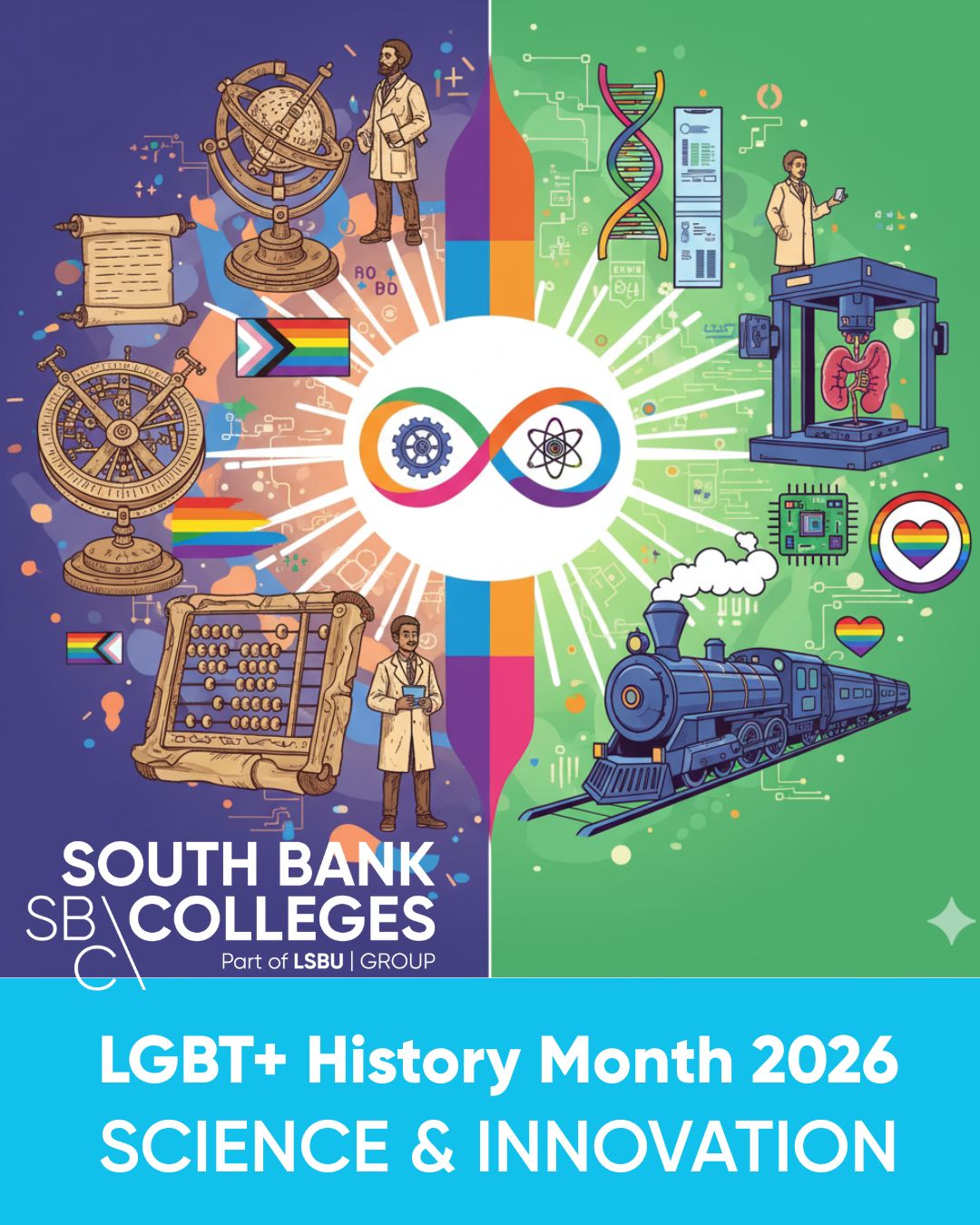
Each year, LGBT+ History Month highlights five historical figures aligned to the theme. The 2026 selection brings together a remarkable group of individuals whose work spans healthcare, engineering, biology and chemistry.
Barbara Burford was a pioneering medical researcher whose work helped establish NHS equality and diversity guidelines. Her research played a key role in improving understanding of LGBT+ patient experiences within healthcare, contributing to more inclusive and respectful medical practice. Burford’s legacy demonstrates how research can directly improve lives when it is guided by empathy as well as evidence.
Charles Beyer, a locomotive engineer and co-founder of the Institution of Mechanical Engineers, helped shape the foundations of modern engineering. His work influenced railway technology at a time when industrial innovation was transforming society. Beyer’s story reminds us that LGBT+ people have long been present at the heart of technological progress, even when their personal lives were forced into silence.
Elke Mackenzie, a botanist whose research focused on lichens in Antarctica, made important contributions to our understanding of extreme environments. Her work supported wider scientific knowledge about ecosystems and climate, long before environmental science became a mainstream concern. Mackenzie’s career highlights how scientific curiosity can take people to the very edges of the world.
Jemma Redmond, a contemporary biotechnologist, is known for developing 3D bioprinting technologies capable of creating tissues and organs. Her work sits at the cutting edge of medical innovation, with the potential to transform healthcare and regenerative medicine. Redmond’s achievements underline the importance of diverse voices in shaping the future of science.
Finally, Robert Boyle, often described as a founder of modern chemistry and the scientific method, fundamentally changed how science is conducted. His emphasis on experimentation, observation and evidence laid the groundwork for centuries of scientific progress. Recognising Boyle within LGBT+ History Month challenges assumptions about who belongs in the history of science.
Education, inclusion and the future
At South Bank Colleges, LGBT+ History Month is not just about looking back. It is about creating inclusive learning environments where students can see themselves reflected in the subjects they study and the careers they aspire to. Representation matters. When students learn that people like them have contributed to science, innovation and discovery, it helps to build confidence, ambition and a sense of belonging.
Science education today is about more than technical knowledge. It is about critical thinking, ethical responsibility and collaboration. By celebrating LGBT+ contributions to science and innovation, we reinforce the idea that progress depends on diverse perspectives working together.
As LGBT+ History Month 2026 reminds us, we are called to claim our past, celebrate our present, and create our future. Education plays a central role in that journey – equipping the next generation not only with skills, but with the values needed to shape a fairer, more inclusive world.